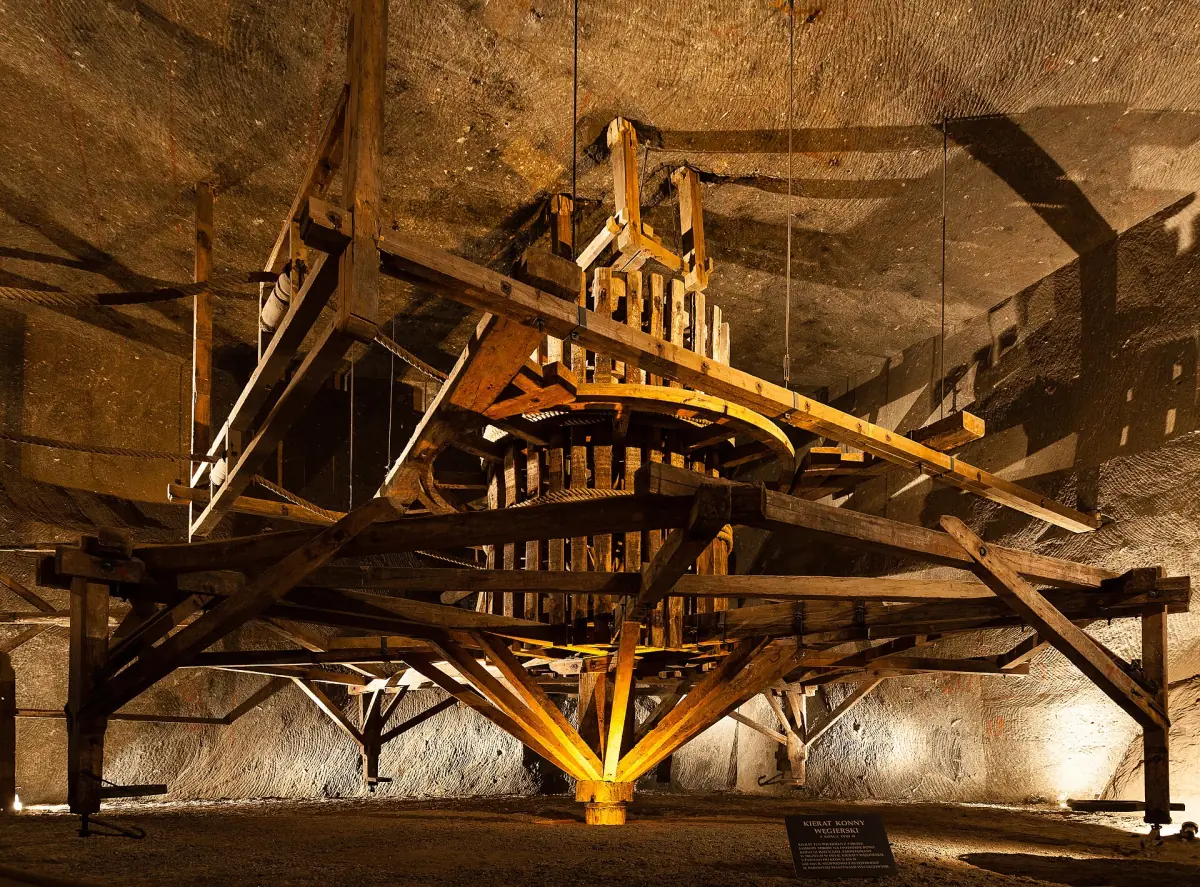
The history of Wieliczka Salt Mine in brief
The history of Wieliczka Salt Mine starts in the 13th century, when rock salt mining began. Industrial mining began in the 1280s, and the first written mention of rock salt appears in the town charter of 1290. From the end of the 13th century, Wieliczka and Bochnia worked as one enterprise, the royal Kraków salt works (Żupy Krakowskie). The Saltworks Castle in Wieliczka administered them.
Rock salt production ended in 1964, and the deposit was fully given up on 30 June 1996. Visitors were walking through the mine long before that. If you want the numbers behind the story, see the Wieliczka Salt Mine facts, and for a visit the page on Wieliczka Salt Mine tickets.
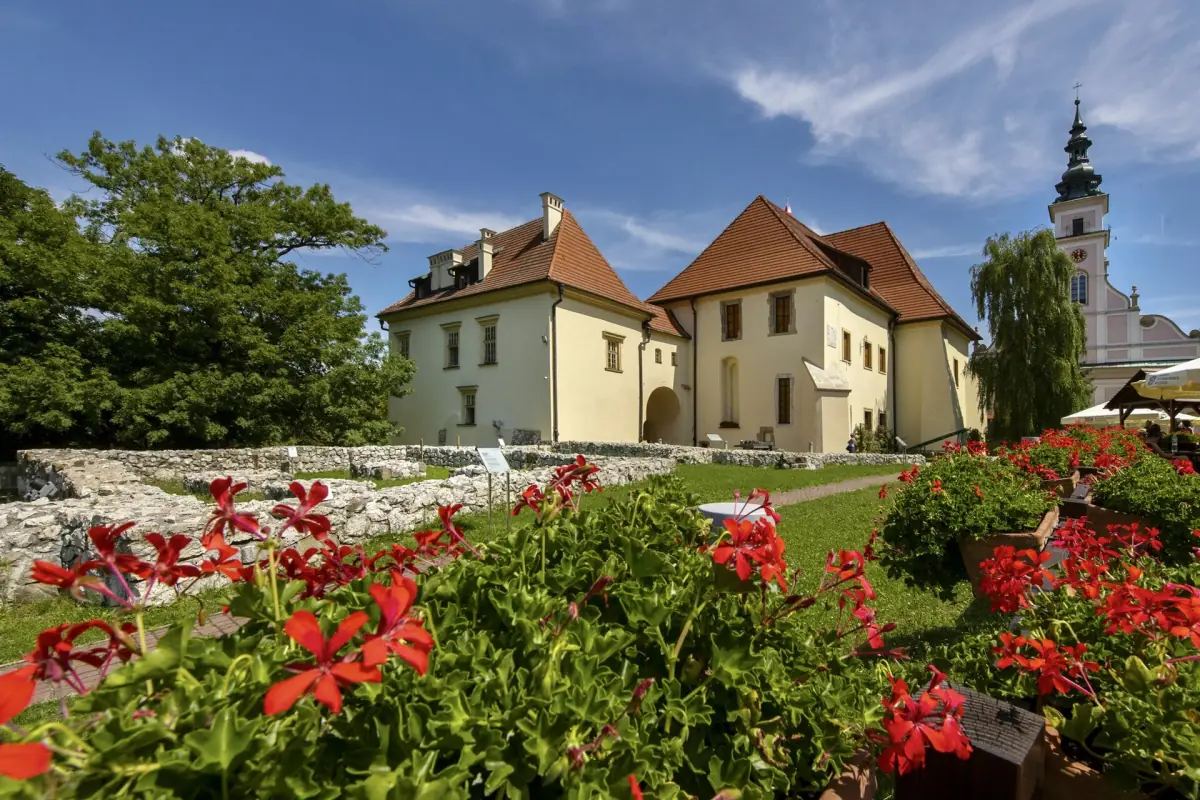
Timeline: Wieliczka Salt Mine from 1280 to 2013
The main dates in order.
| Date | What happened |
|---|---|
| 13th century | Rock salt mining begins at Wieliczka |
| 1280s | Industrial mining begins |
| 1290 | First written mention of rock salt, in the town charter |
| End of the 13th century | The royal Kraków salt works run as a joint enterprise |
| Early 19th century | An underground route for visitors exists |
| 1896 | The chamber of the Chapel of St Kinga dates from this year |
| 1964 | Rock salt extraction ends |
| 1978 | Wieliczka is inscribed as a UNESCO World Heritage Site |
| 30 June 1996 | All exploitation of the deposit ends |
| 2013 | The UNESCO listing is extended |
Between 1964 and 1996 the mine worked with brine. If you remember three dates, take 1290, 1964 and 1996.
Our pick: a guided tour from Kraków
A licensed underground guide explains the centuries of salt mining on the way.
Hand-picked tours, booked through GetYourGuide. Prices are indicative starting prices in euros (as of October 2026). Tap a tour for live availability and the current price in your currency.
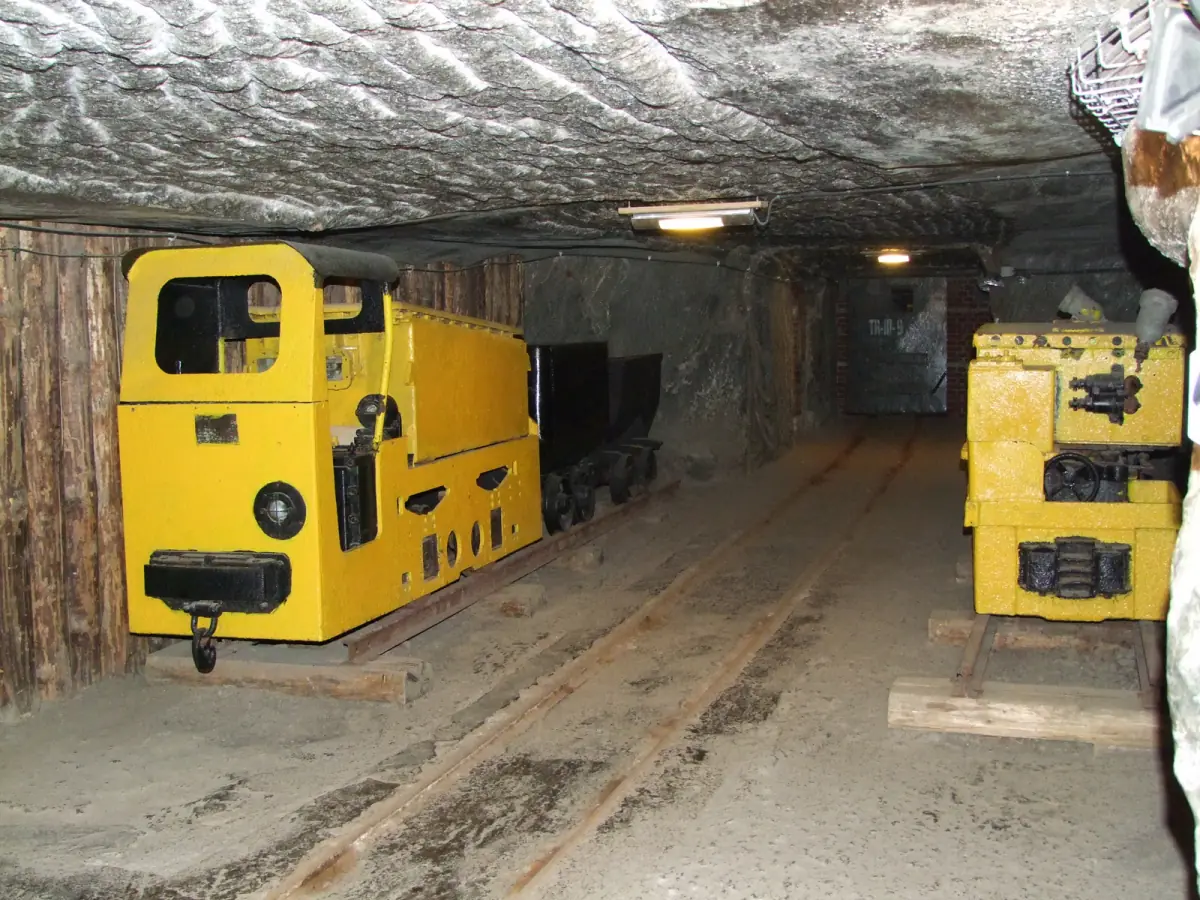
Wieliczka Salt Mine tours and tickets
Guided visits to the Tourist Route and the Miners' Route, with live prices and availability.
From a working mine to a visitor route
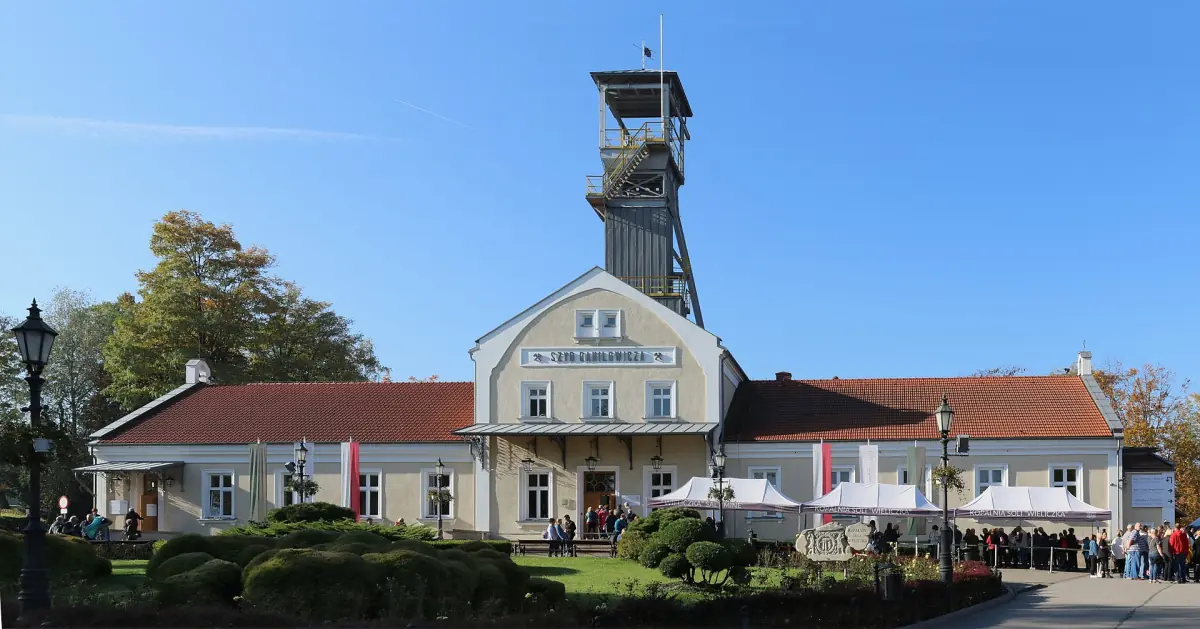
The underground route for visitors dates to the early 19th century. Mining and visiting therefore ran side by side for well over a century. Today the visit starts at the Daniłowicz Shaft, and the Kraków Salt Works Museum runs the underground exhibition on level III.
The museum section is included in the ticket and adds about 1 hour. It is not the same as the Saltworks Castle above ground. The underground exhibition and the castle are two different places, so check which one a tour includes. See Wieliczka Salt Mine tours for the routes.
The Chapel of St Kinga and the miners who carved it
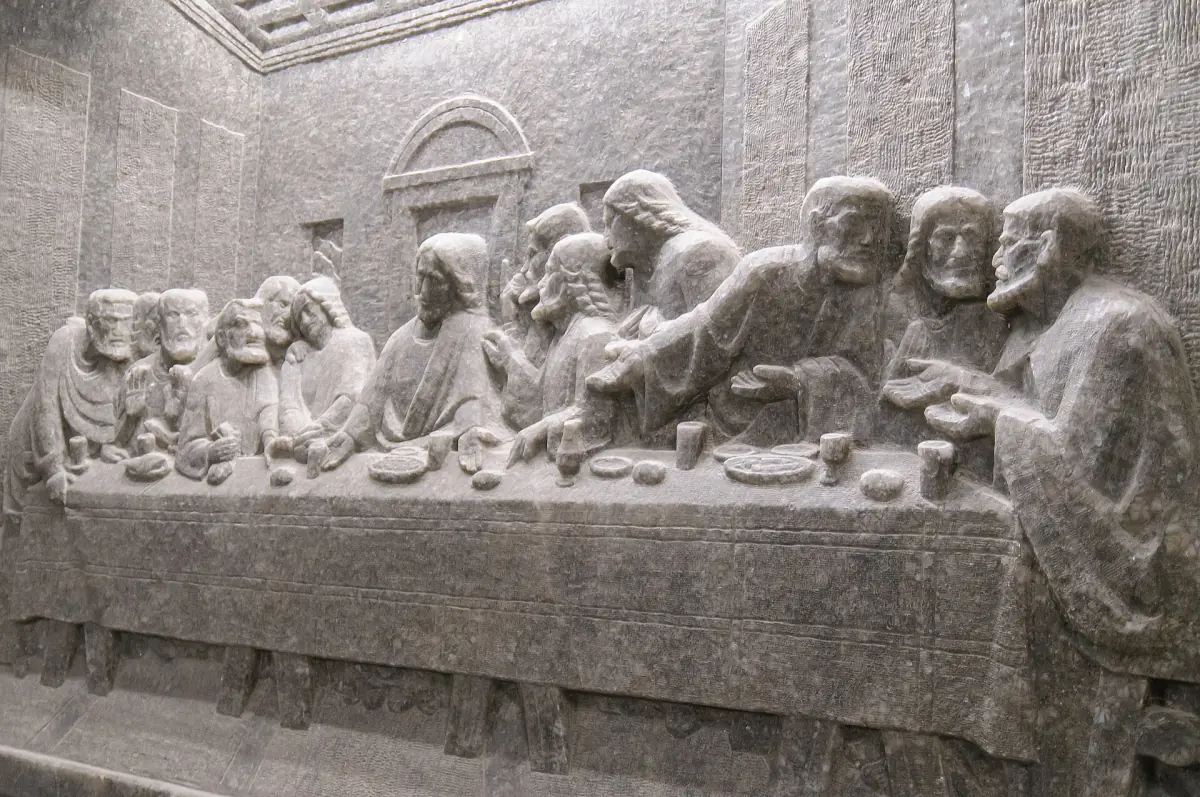
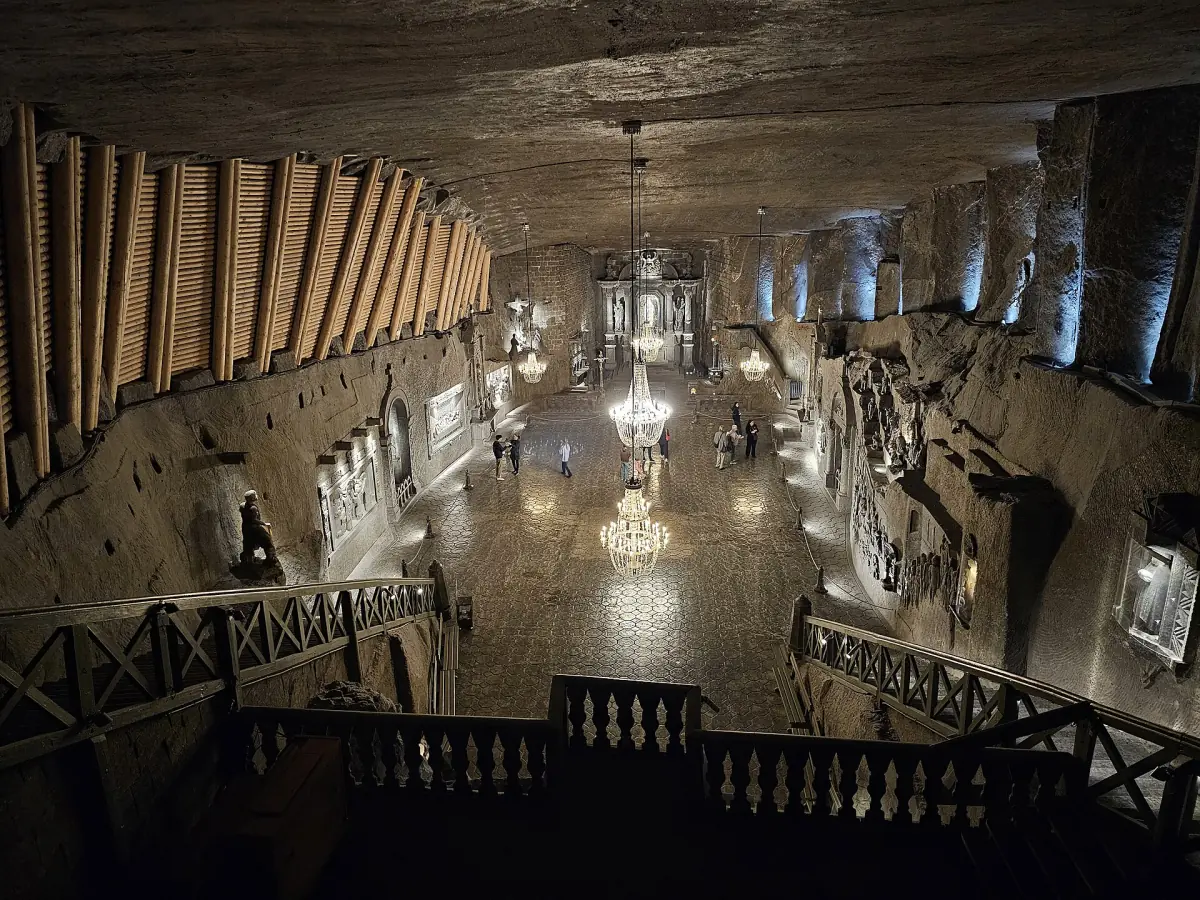
The Chapel of St Kinga (Kaplica św. Kingi) sits 101 m underground. Its chamber dates from 1896. Józef and Tomasz Markowski and Antoni Wyrodek were the central miner-sculptors, and further generations of miners worked on it. The Last Supper relief by Wyrodek was inspired by Leonardo da Vinci but is not a work by Leonardo.
The floor is cut from a block of salt, and the chandeliers are made of salt crystals. Sunday Masses, weddings, the Christmas midnight Mass and occasional chamber concerts take place here, but you cannot count on a set time to attend. You enter the chapel with your guide on the route. Read more on the page about the Chapel of St Kinga.
The legend of St Kinga
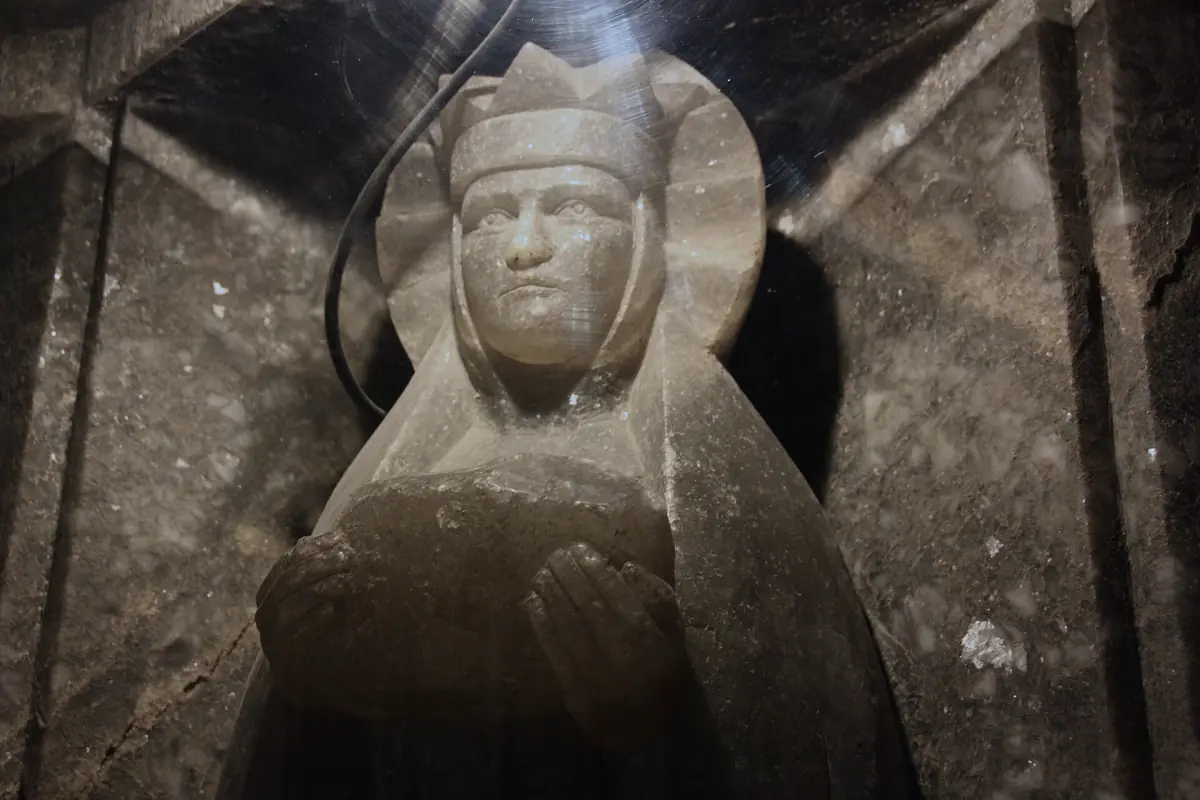
The mine tells a legend that links the chamber Janowice to Kinga. The legend connects Kinga with the finding of the salt and with her engagement ring. It is a legend and not a documented event, and it should not be told as the historical discovery of the salt.
Treat the story as part of the mine's tradition. It explains why the chapel carries her name, but it does not date the start of mining. For the dates, rely on the timeline above.
Miners' work and the Miners' Route
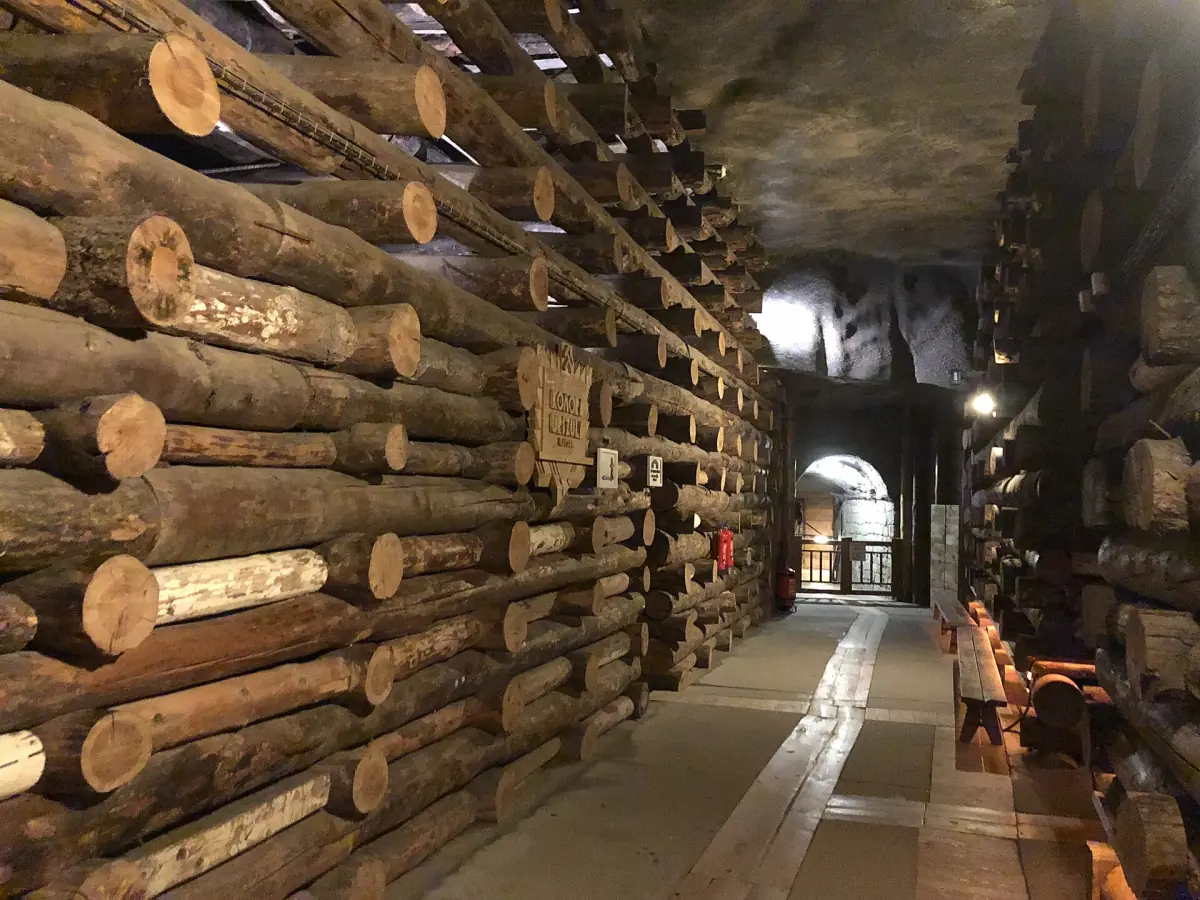
The Miners' Route recalls the daily work underground. You test the air, search for salt and find your way, and the route recalls the historic jobs of the methane tester and the timberman. You wear a helmet, a lamp, a carbon monoxide absorber and a protective suit. The route is for visitors from 10 years, and guides speak Polish or English.
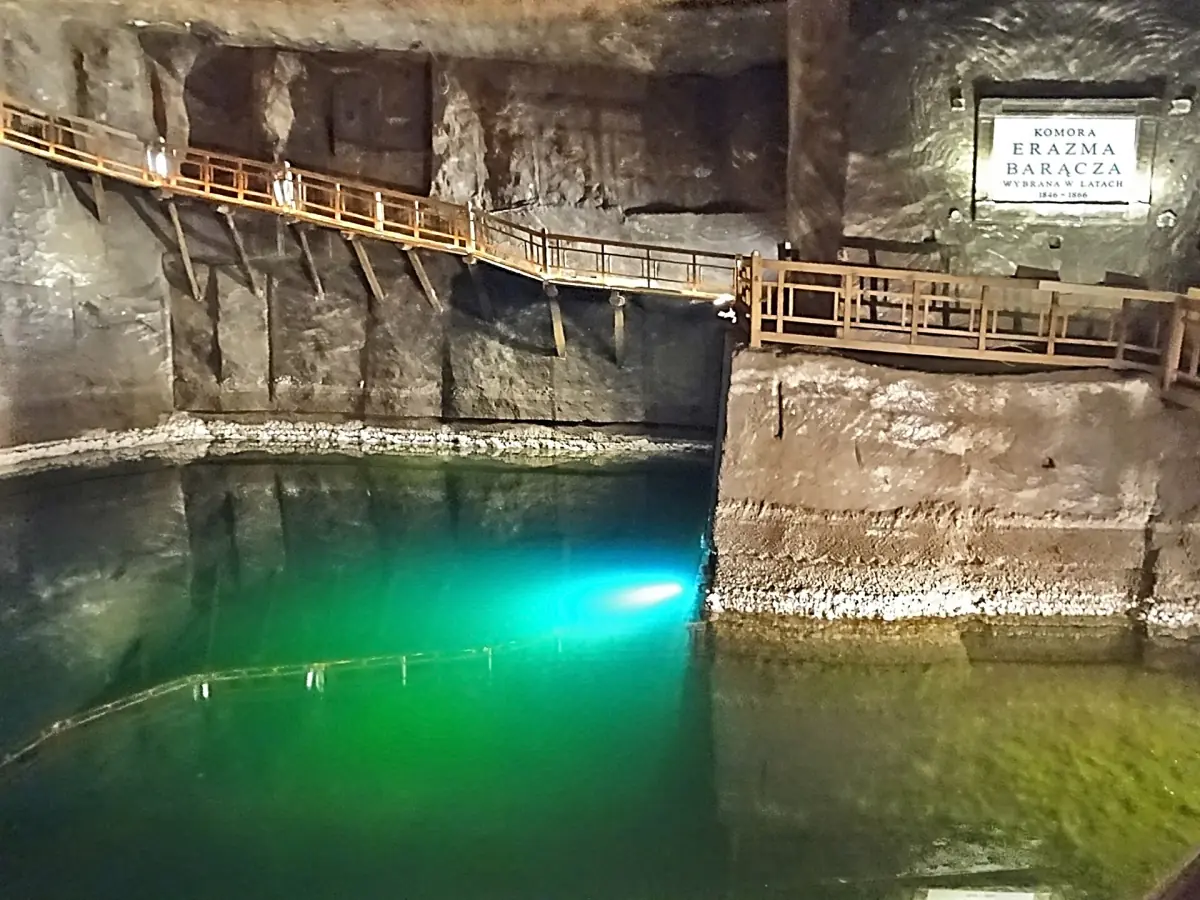
Another trace of the mine's later history is the Weimar chamber. Its brine pond formed when the floor was flooded in the 1960s. There is a salt sculpture of Skarbnik and a memorial to Goethe. See the Miners' Route and the chambers and lakes for what you pass.
UNESCO: how the mine became a World Heritage Site
The site is called Wieliczka and Bochnia Royal Salt Mines. It was inscribed in 1978, extended in 2013 and meets criterion (iv). The listing covers both mines and the Saltworks Castle in Wieliczka. Wieliczka was one of the first 12 sites on the World Heritage List.
The shared listing does not give a shared entry. Plan and buy for each place separately.
Keep exploring
Pages that continue the story.
Wieliczka Salt Mine history: frequently asked questions
When did salt mining start at Wieliczka?
Rock salt has been mined since the 13th century. Industrial mining began in the 1280s, and the first written mention of rock salt dates from 1290.
When did mining stop?
Rock salt extraction ended in 1964. All exploitation of the deposit stopped on 30 June 1996. The mine worked with brine in between.
When did visitors first go underground?
An underground visitor route has existed since the early 19th century, long before mining ended.
Is the legend of St Kinga true?
It is a legend. The mine links the chamber Janowice to Kinga, the salt and her engagement ring, but it is not a documented historical event.
Is Wieliczka a UNESCO site?
Yes. Wieliczka was inscribed in 1978, and the listing, which now includes Bochnia and the Saltworks Castle, was extended in 2013.
Is this the official website of the mine?
No. This is an independent guide and is not run by the mine, the museum or any tour company.